Skip to content
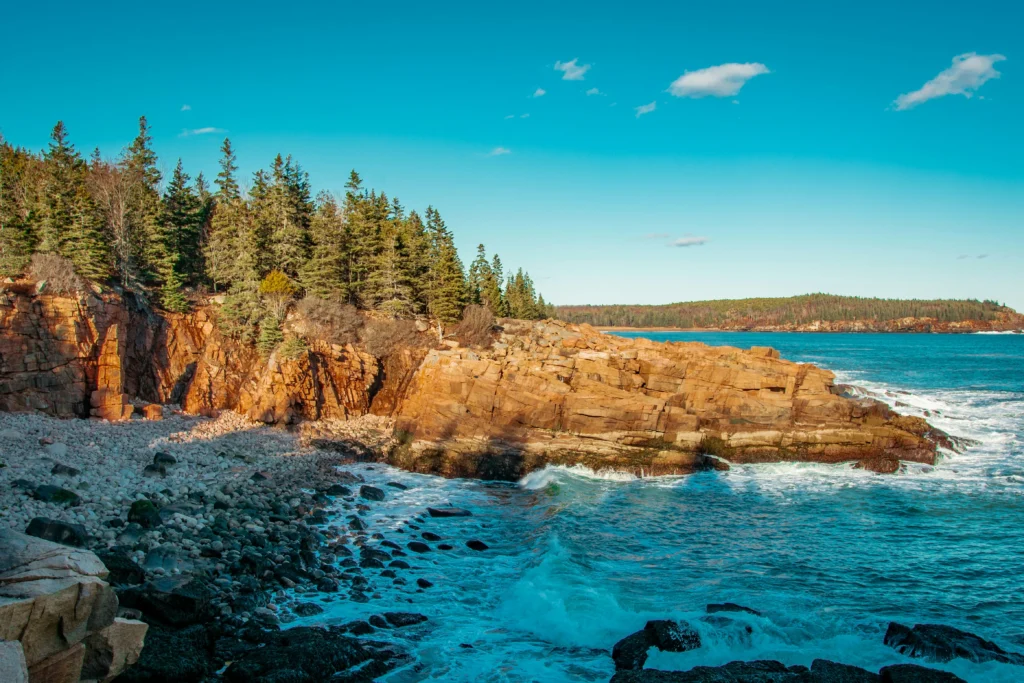
Every year, millions of people drive up a long causeway onto a small island off the coast of Maine and discover something they were not fully prepared for. And I am one of them also.
I knew there would be mountains. I knew there would be an ocean. I had seen the photos of pink granite cliffs dropping straight into blue-green Atlantic water, of sunrise light turning the highest peak on the East Coast into something that looks like a painting.
What I was not prepared for was how all of it — the mountains, the ocean, the lighthouses, the lobster, the tiny charming town, the carriage roads built by a man named Rockefeller — exists in a space so compact that I can drive across it in under an hour. Isn’t it crazy?
Acadia National Park is 49,000 acres of wild, beautiful coastline packed onto one island. It is the only national park in New England. It draws over 4 million visitors a year and continues to grow every year. And it earns every single one of them.
This is your complete Acadia National Park itinerary for 2026. It covers 3, 4, and 5-day options. It covers where to stay, what to eat, which trails are worth it, how to beat the crowds, and every logistical detail you need before you leave home — including the 2026 fee changes that will catch international visitors completely off guard if they do not read this first.
By the time you finish reading, you will know exactly what to do, in what order, and what everyone else gets wrong.
Table of Contents
Acadia National Park itinerary at a glance
Before the details, here is the full trip summarised. Bookmark this. Come back to it every morning of your visit.
3-day base plan:
- Day 1: Arrive, explore Bar Harbor, optional boat tour, dinner downtown
- Day 2: Park Loop Road — Sand Beach, Ocean Path, Thunder Hole, Jordan Pond
- Day 3: Cadillac Mountain sunrise, Beehive Trail, Bass Harbor Head Lighthouse
Add Day 4: Schoodic Peninsula day trip or full carriage roads bike day
Add Day 5: Isle au Haut ferry, Great Head Trail, hidden gem spots
Quick logistics to know before you go:
- Park entry: $35 per vehicle (valid 7 days)
- US residents annual pass: $80 (America the Beautiful — covers all national parks for one year)
- US residents aged 62+: Senior Annual Pass $20/year or Senior Lifetime Pass $80 one-time
- Non-US residents: an additional $100 per person surcharge at Acadia from January 2026 — plan for this
- Non-US resident annual pass: $250 for unlimited entry to all national parks for one year
- The Cadillac Mountain drive requires a separate $6 timed vehicle reservation on recreation.gov
- 2026 reservation window: May 20 through October 25
- Island Explorer shuttle is free to ride — but you still need a valid park pass to board
- Best time to visit: September and early October
Everything you need to know before visiting Acadia
Get these right before you leave home. Getting them wrong will not just cost you money — it will cost you the sunrise.
Park entry fees
It costs $35 per vehicle to enter Acadia. That pass is valid for 7 days, covering everyone in the car for your entire trip.
If you are visiting any other national park in the same year, buy the America the Beautiful annual pass for $80 instead. It covers every national park in the country for a full year. Two park visits and it has already paid for itself.
US residents aged 62 and older can get the Senior Annual Pass for $20 per year, or the Senior Lifetime Pass for a one-time fee of $80. If you qualify, I recommend that you get the lifetime pass. It is one of the best deals in American travel.
The 2026 international visitor surcharge — read this carefully
Starting January 1, 2026, non-US residents will pay an additional $100 per person surcharge to enter Acadia. This is on top of the standard $35 vehicle fee.
A family of four international visitors arriving in a rental car pays $435 at the gate. International travelers can blame it on Donald Trump.
The non-US resident annual pass costs $250 and covers unlimited entry to Acadia and all other national parks for one year. If you are visiting two or more parks on the same trip, the annual pass pays for itself immediately.
Free admission days exist — but from 2026, they apply to US citizens and permanent residents only. International visitors pay full fees on those days. Do not plan a trip around a free admission date without checking this first.
The Cadillac Mountain reservation — the most important logistic in this entire guide
Here is the detail that catches more first-time visitors off guard than anything else.
Driving to the top of Cadillac Mountain requires a separate timed vehicle reservation. Not just a park pass. A specific reservation, booked on recreation.gov, with an entry window by which you must arrive.
For 2026, reservations are required from May 20 through October 25. The fee is $6 per vehicle on top of your park pass. That $6 is non-refundable under any circumstances — including fog, bad weather, and emergency road closures — unless you cancel at least 48 hours before your entry time.
Reservations are released in two batches. Thirty percent go live at 10am ET, 90 days in advance. The remaining 70 percent go live at 10am ET, exactly two days before your visit. Sunrise slots go in minutes. Sometimes seconds. Set an alarm and be ready.
What if you cannot get a reservation?
Hike up instead. The North Ridge Trail is 4.4 miles round trip. The South Ridge Trail is 6.7 miles. Neither requires a reservation, and many people who have done both say the hike is better than the drive — you earn the summit rather than parking at it. It’s good for your health too.
Sunset is also worth considering. Sunset slots are often available when sunrise has been fully booked for weeks. The views are different — warmer, more golden — and the crowd is a fraction of the 5am mob.
One more thing: the Island Explorer shuttle does not serve Cadillac Summit Road. If you plan to rely on the shuttle for the rest of your trip, you still need a car, a taxi, or a commercial tour to reach the top.
Download and save your reservation QR code before you leave your accommodation. Cell service near the summit is unreliable. A ranger must scan it to let you in.
Do not assume you will have a signal when you need it. The approach road to the summit is one of the least reliable cell service spots in the park. Screenshot the QR code, save it to your camera roll, and keep it open before you leave the parking area at the base. A ranger cannot let you through without scanning it, and there is no workaround.
Getting to Acadia
Acadia sits on Mount Desert Island off the coast of Maine. The nearest airports are Bangor (1 hour away), Portland (3 hours), and Hancock County Bar Harbor Airport, which is literally 10 minutes from the park entrance. From Boston, it is roughly a 5-hour drive.
If you’d rather make the journey itself part of the trip, our Boston to Bar Harbor road trip guide covers the full 280-mile route with stops in Salem, Portsmouth, Kennebunkport, and Portland along the way.
There is no direct train service. The most practical way is to drive or fly into one of those airports and rent a car — though once you are on the island, the free shuttle means you barely need it during the day.
The Island Explorer — your most underused tool
The Island Explorer is a free, propane-powered bus with multiple routes covering every major park destination, all Bar Harbor hotels, and the campgrounds. The ride is free. All you need is a valid park entry pass to board buses that serve the park.
From 2026, three key routes start early on May 20: the Gateway Center route, the Loop Road route, and the Schoodic route. Full service on all remaining routes runs from June 23 through October 12.
This matters for spring visitors. If you arrive before June 23, only those three early routes are running. You will need your car for everything else.
Here is why the shuttle changes everything: parking at Sand Beach and Jordan Pond fills before 9am in summer. The people who parked at the Hulls Cove Visitor Center, hopped on the shuttle, and arrived fresh at the trailhead — those people are already hiking. You are circling the lot. Use the shuttle whenever possible.
Cell service and navigation
Cell service in Acadia is unreliable the moment you leave Bar Harbor town and step onto a trail. Download AllTrails maps offline before leaving your accommodation each morning.
Pick up a free paper NPS trail map at the Hulls Cove Visitor Center. Do not rely solely on your phone — it will eventually fail you at the worst possible moment.
The Peregrine falcon trail closure — a planning landmine
Every year, people build their Acadia itinerary around the Precipice Trail or the Jordan Cliffs Trail. Every year, some of them arrive and find a sign that says the trail is closed.
I have spoken to visitors who drove six hours specifically to hike the Precipice and arrived in June to find it closed for another eight weeks. The disappointment is real. Check the closure status before you leave home, not when you arrive at the trailhead.
The Precipice Trail and Jordan Cliffs Trail close every year from March through early August. Peregrine falcons nest on the cliff faces during this period, and the NPS enforces the closure rigorously. The trails reopen once the chicks have fledged — usually sometime in late July or early August, but not always.
If either trail is on your list, check nps.gov/acad/planyourvisit for current closure status before you commit to any plans around them.
Understanding Acadia: regions and where to base yourself
Most people think of Acadia as one place. It is actually several — spread across different parts of the Maine coast, each with its own character.
Mount Desert Island is where almost everything happens. This is the main island, home to Cadillac Mountain, Park Loop Road, the carriage roads, Bar Harbor, Jordan Pond, Sand Beach, and essentially every attraction you have ever seen in a photograph of Acadia. Almost all of your time will be here, especially on a first visit.
Bar Harbor sits at the northeast corner of the island. It is the gateway town — small, walkable, full of excellent restaurants, shops, and tour operators who know the park better than most guidebooks.
This is where most visitors stay, and for good reason. It is close to the most popular park entrances and you can walk from your hotel to the shuttle stop. The one downside: parking in downtown Bar Harbor in peak summer is genuinely painful. Stay within or near the downtown core, and you eliminate that problem entirely.
I made the mistake of staying a mile outside town on my first visit. Every evening I drove into Bar Harbor for dinner and spent 20 minutes hunting for parking before giving up and eating somewhere I did not actually want to eat. Stay downtown. It changes the whole trip.
Southwest Harbor sits on the quieter western side of the island. Fewer restaurants, smaller hotel selection, no crowds, no parking chaos — and significantly closer to Bass Harbor Head Lighthouse and the west-side trails that most visitors never reach. Good choice for couples who want peace over proximity to nightlife.
Schoodic Peninsula is the only part of Acadia that sits on the mainland — about an hour’s drive east of Bar Harbor. It gets barely 10% of the park’s total visitors despite having essentially the same quality of coastal scenery as the main island. If you have 4 or 5 days, spending a day here feels like a completely different park.
I almost skipped Schoodic on my first trip because the drive felt like too much effort. It was the best decision I reversed all week. I arrived expecting a smaller version of the main island and found something completely different — wilder, quieter, and in some ways more dramatic. Do not skip it.
Isle au Haut is the wild one. A small island accessible only by mail ferry from Stonington, which is itself a 90-minute drive west of Bar Harbor. The most remote section of Acadia. Barely any services. Trails that sometimes have the ocean entirely to yourself. Only worth the logistics if you have 4 or more days and a genuine taste for wilderness.
How to beat the crowds at Acadia
Here is the thing nobody tells you until after your trip is over: Acadia’s most popular spots are genuinely mobbed in summer. The Sand Beach parking lot fills before 9am. Jordan Pond is a traffic nightmare by mid-morning. In July and August, the park records over 4 million visits per year — packed into a space smaller than many suburban counties.
You can still have a wonderful visit in peak season. You just need a plan.
Arrive before 8am
This is the single most powerful thing you can do. The people who get to Sand Beach at 7am have the place to themselves — cool air, golden light, zero queue. The people who arrive at 10am park half a mile away and fight through a crowd to reach the water. Early starts are not optional in peak season. They are the strategy.
I have arrived at Sand Beach at 6:45am on a Tuesday in August and had the entire beach to myself for almost an hour. The light at that time is pink and low. The water is still. The only sounds are waves and seabirds. By 9am, the same beach had 200 people on it. That one hour is why people set alarms.
Use the Island Explorer shuttle
Park at the Hulls Cove Visitor Center or the Trenton Acadia Gateway Center — both have large, free parking areas off the island. Get on the shuttle. Ride it to wherever you want to go. This eliminates the parking problem entirely and is honestly more pleasant than driving Park Loop Road with stressed-out tourists inches from your bumper.
The cruise ship hack nobody talks about
Bar Harbor is a major cruise ship port. When a large ship is in — and during peak season, ships dock more than 100 times per year, sometimes carrying 4,000 passengers — the town and the park get significantly more crowded from roughly 9am to 5pm.
Before your trip, check portcall.com for the Bar Harbor cruise ship schedule. On large ship days, either hit the popular spots before 8am, head to the quiet west side of the island, or plan a day trip to Schoodic Peninsula, where none of those passengers will be. This one tip can save an entire day.
Alternative parking spots that stay open longer
Not every parking area in the park fills at the same rate. These consistently have more availability than the famous ones:
- Sieur de Monts — rarely full before 10am, access to multiple trails, and the Wild Gardens of Acadia
- Eagle Lake Carriage Road access off Route 233 — quieter entry to the carriage road system
- Schooner Head Overlook — limited spaces but almost nobody knows it exists
- Seawall area on the west side — abundant parking even on busy summer Saturdays in July
Go in the evening
Park traffic drops noticeably after 5pm as visitors head to Bar Harbor for dinner. Ocean Path at 6pm, with golden hour light on the pink granite cliffs, is one of the most beautiful things you can see in the park — and you may have long stretches of it entirely to yourself. Bass Harbor Head Lighthouse at 7pm, with the last light turning the rocks warm orange, is even better.
Weekdays beat weekends
If you have any flexibility in your travel dates, put your most popular days — Sand Beach, Jordan Pond, Cadillac Mountain — on a Tuesday or Wednesday. Weekend crowds are measurably larger throughout the summer. The difference on a Saturday in July versus a Wednesday in July is significant enough to completely change the experience.
Where to stay near Acadia National Park
Hotels in Bar Harbor
Bar Harbor has accommodation at every price point, from clean basic motels to waterfront luxury.
The Bar Harbor Inn and Spa sits on the waterfront with excellent shuttle access, free parking, a pool, and on-site dining — a solid mid-range choice in an almost perfect location.
I had a room facing the water. I woke up before my alarm because the light coming off the harbour at 6am was doing something I had not seen before. That view alone justified the rate.
The Bar Harbor Villager Motel is the best budget pick in the downtown core: updated rooms, clean bathrooms, and you can walk to everything. For a splurge, the West Street Hotel and the Harborside Hotel both sit on the water with the kind of morning views that make you want to extend your stay by a night.
Whatever you book, do it early. Bar Harbor accommodation fills months in advance for July and August. Three months minimum. Six months ahead for anything near the 4th of July.
Southwest Harbor
The Claremont is one of the most beautiful places to stay in all of Maine — a classic New England hotel with a pool overlooking the water and mountains, on-site dining, and an atmosphere that feels completely removed from the Bar Harbor summer chaos. You will drive further to reach Cadillac and Sand Beach. Many visitors consider that a very fair trade.
Camping inside the park
Three campgrounds sit inside Acadia, all requiring advance reservation at recreation.gov.
Blackwoods Campground has the best location — closest to the main park attractions and the most consistently recommended by experienced Acadia visitors. Sites cost $30 per night. Seawall Campground sits on the quieter west side, closer to Bass Harbor Head Lighthouse. Schoodic Woods Campground is on the mainland near the Schoodic Peninsula — the right choice if you want to explore that section of the park without the main island crowds.
Important to know before you arrive: none of the in-park campgrounds have showers. Fee-based shower facilities are located approximately half a mile from Blackwoods. Plan accordingly.
3 day Acadia National Park itinerary
Three days is the sweet spot. Long enough to see everything that matters, short enough that you are moving with purpose rather than wandering aimlessly. Here is the breakdown.
At a glance:
- Day 1: Arrive, explore Bar Harbor, optional boat tour, dinner downtown
- Day 2: Park Loop Road — Sand Beach, Ocean Path, Thunder Hole, Jordan Pond, Bubble Rock
- Day 3: Cadillac Mountain sunrise, Beehive Trail, Bass Harbor Head Lighthouse
Day 1 — Arrive and explore Bar Harbor
Most people drive to Acadia, which means Day 1 often involves several hours on the road before you even get here. Keep it simple. You have two full days of serious hiking and early starts ahead of you.
Check in. Drop your bags. Walk Shore Path — a flat, easy trail right along the Bar Harbor waterfront with views out to the Porcupine Islands. It takes about 30 minutes, costs nothing, and is one of the prettiest easy walks in the whole park.
If you arrive early enough and the timing works, book a boat tour. The lobster boat tour runs about 2 hours — you watch the crew haul real lobster traps, learn how lobster fishing works, and see the island from the water in a way you cannot get from land. Whale watching tours run about 3 hours and work well if you have the energy after a long travel day. Most operators run May through October. Book in advance on summer weekends — they fill.
For dinner, Side Street Cafe does a lobster grilled cheese that has achieved minor local legend status, plus excellent cocktails. The Travelin’ Lobster is the go-to for lobster rolls — butter or mayonnaise, no drama, just excellent lobster. Mount Desert Island Ice Cream for dessert, which uses local Maine dairy and makes small-batch seasonal flavours worth queuing for.
End the night early. Tomorrow starts before sunrise.
Day 2 — Park Loop Road
This is the big day. Park Loop Road is a 27-mile scenic route connecting all of Acadia’s most famous spots, and it is one-way for a significant portion of its length — do things in the right order and you will not double back.
Start at Sand Beach. Aim to be parked or off the shuttle by 7am. Sand Beach is a beautiful stretch of pale sand enclosed by pink granite headlands — genuinely unusual for Maine, where most beaches are nothing but rock. Swim if you dare. The Atlantic Ocean here peaks around 60°F in August and most people manage about three minutes before retreating up the beach with their dignity intact.
From Sand Beach, walk Ocean Path instead of driving to the next stop. Ocean Path is a flat 2.2-mile trail that runs parallel to Park Loop Road all the way to Otter Cliffs, passing Thunder Hole and Monument Cove along the way. It is the best walk in the park — pink granite underfoot, open Atlantic on one side, dark spruce forest on the other, and the kind of light on a clear morning that makes you stop walking just to look.
Thunder Hole timing — this detail matters more than you think
Thunder Hole is a small sea cave where waves compress into a gap in the rocks and explode outward. When it works, the boom can be heard from far away and the spray shoots 40 feet in the air. When it does not work, it is just a hole in some rocks and you will spend the walk back wondering what the fuss was about.
The magic window is 1 to 2 hours before high tide with some swell running. Check Tides.net the night before. Plan your Ocean Path walk around the tide time. This single detail separates the people who get the show from the people who wonder why this is on every itinerary they read.
After Ocean Path, drive to Jordan Pond. This is Acadia’s most famous lake — glassy clear water, two perfectly round hills called the Bubbles reflected on its surface, surrounded by forest so still on calm mornings it looks like a mirror that has never been touched. The Jordan Pond House restaurant has been serving popovers and afternoon tea since the 1890s. Book a table in advance.
The walk-in wait can reach 90 minutes at lunch in July and August, and the popovers are worth planning around — crisp outside, pillowy inside, served with butter and jam and a view that no restaurant in any city can match.
If you have energy after lunch, do the Bubbles Nubble Loop — a 3.6-mile trail that takes you up to Bubble Rock, a massive boulder balanced on a cliff edge by a retreating glacier 10,000 years ago, with views back down over Jordan Pond that explain immediately why this is one of the most photographed spots in New England.
Day 3 — Cadillac Mountain sunrise, Beehive Trail, Bass Harbor Head Lighthouse
Wake up earlier than feels reasonable. Check your Cadillac Mountain reservation. Check the weather. Drive up.
Cadillac Mountain is 1,530 feet tall. Between October and early March, its summit sees the first sunrise light anywhere in the United States. Outside that window the sunrise is still extraordinary — 360-degree views of Frenchman Bay, Bar Harbor spread out below, the Porcupine Islands scattered across the water, and the horizon turning from black to orange to pink while you stand on bare granite at the top of the Atlantic seaboard.
Bring a warm layer. Even in July, it is cold at 5am up there. Bring a headlamp. Bring something warm to drink. Arrive at least 30 minutes before the listed sunrise time — the parking area fills fast. And download your reservation QR code before you leave. Cell service near the summit is unreliable and a ranger must scan your code to let you through.
After sunrise, drive back down and hike the Beehive Trail. The Beehive is 1.4 miles round trip, but those 1.4 miles involve iron rungs bolted into the cliff face, short ladder sections, and a series of exposed ledges with significant drop-offs on one side. The views from the top — Sand Beach directly below, the Atlantic spreading out beyond it, Cadillac Mountain rising behind you — are some of the best in the park.
Do not attempt it if the trail is wet. Do not attempt it if heights bother you even slightly. It is not a gentle nature walk. It is a legitimate scramble and an honest adrenaline experience. If that sounds too intense, Gorham Mountain (3.4 miles, no ladders) gives you similar views with far less exposure.
Afternoon: drive to the west side of the island. Bass Harbor Head Lighthouse sits on the southernmost tip of Mount Desert Island, perched on a rock ledge above the Atlantic. Built in 1858. Red and white. The most photographed spot on the west side of the island, and for very good reason.
For the best shot, do not stand at the observation platform at the top with everyone else. Walk down to the rocks below the lighthouse. The low angle — lighthouse framed above, rocky shore in the foreground, last light turning everything warm — is the photograph you have seen in travel magazines. Wear shoes with grip. The rocks get slippery. Arrive 30 to 45 minutes before sunset and stay until the light is completely gone.
Dinner: Harbor Table in Southwest Harbor, right on the west side after the lighthouse. Wood-fired pizza, handmade pasta, seasonal cocktails, chefs visible through an open kitchen. The kind of meal that makes you wish you had another night on the west side. Book ahead.
Extending to 4 days: what to add to your Acadia itinerary
Follow the 3-day plan above. Then choose one of the following for Day 4.
Option A — Schoodic Peninsula
Drive one hour east from Bar Harbor, cross the bridge onto the mainland, and enter what feels like a completely different park.
Schoodic Peninsula is part of Acadia National Park, but it gets barely 10% of the park’s visitors. The 6-mile Schoodic Loop Road circles the peninsula past some of the most dramatic wave-battered granite coastline in Maine. Schoodic Point — the far tip, where the ocean hits the rocks with enough force to send spray 20 feet into the air — is as wild and beautiful as anything on the main island.
Hike Schoodic Head Trail for a panoramic view that includes Cadillac Mountain in the distance across Frenchman Bay. Stop at Frazer Point for a peaceful picnic with harbour views. Walk the Blueberry Hill trail network through spruce forests and coastal ridges where you might have the trail entirely to yourself. Pack lunch — food options near Schoodic are limited and the scenery makes you want to stay longer than you planned.
Option B — West side deep dive
Spend Day 4 on the quieter western half of Mount Desert Island, which most visitors drive past without stopping.
The Beech Mountain South Ridge Loop is 2.4 miles and climbs to a fire tower with sweeping water views in multiple directions, then descends through a forest of moss-covered boulders that looks genuinely enchanted — the kind of place that makes you slow down without meaning to. Follow it with Wonderland Trail, a flat 1.3-mile coastal path through pine forest that ends at a rocky shoreline perfect for tide pooling at low tide, and Ship Harbor Nature Trail next door, which is equally quiet and equally good.
End the day at Seawall Picnic Area with a late-afternoon view of the Atlantic and, on most summer afternoons, almost nobody else around.
Option C — Carriage roads by bike
Rent bikes in Bar Harbor and ride 45 miles of car-free, crushed-stone roads that John D. Rockefeller Jr. built between 1913 and 1940 so he could ride horses without ever encountering a motor vehicle. The roads wind through forests, past Eagle Lake and Jordan Pond, across 17 handsome stone bridges, and up to viewpoints that most hikers never reach. The Eagle Lake loop — about 6 miles, relatively flat — is the classic introduction. Go further into the system and the landscape keeps getting better.
Note: only Class 1 e-bikes are permitted on the carriage roads. Class 2 and 3 are prohibited. Regular bikes are always fine.
5 days in Acadia: the complete experience
By Day 5, you know the park well enough to leave the main routes behind and find it on your own terms.
Option A — Isle au Haut
This is the full commitment option, and it earns that description.
Isle au Haut is the most remote section of Acadia National Park — a small island accessible only by mail ferry from Stonington, which is itself a 90-minute drive west of Bar Harbor. The ferry crossing takes 45 minutes. The park covers roughly half the island. The other half has a year-round population of a few dozen people. There is no gift shop, no restaurant, no reliable cell service. Pack everything you need and plan for a full day.
The Duck Harbor Trail and the Goat Trail along the coast are the highlights — wild, quiet, with the Atlantic entirely to yourself on most mornings. Reserve your ferry well in advance in summer. Seats are limited and the experience is worth planning around.
Option B — Great Head Trail and the hidden gems tour
Great Head Trail is a 1.5-mile loop on the southeastern tip of Mount Desert Island that ends on a headland with dramatic views over Sand Beach and the open Atlantic. It is one of the most beautiful short trails in the park and one of the most overlooked — far less crowded than the Beehive despite being every bit as rewarding. After Great Head, spend the afternoon hunting down the spots that most Acadia visitors never find. All of them are covered in the hidden gems section below.
Option C — Precipice Trail (when open)
If the Peregrine falcons have finished nesting and the trail is open, Day 5 is the day for the Precipice.
The Precipice is 1.6 miles of iron rungs, ladders, and exposed cliff face that makes the Beehive look like a nature walk. The views from the top are unmatched in the park. Do not attempt it in wet conditions. Do not attempt it if heights bother you even slightly. Do not attempt it with children who cannot follow exact instructions without hesitation. When it is open and dry, it is the most thrilling few hours you can spend in Acadia. Check nps.gov for current closure status before planning your trip around it.
Acadia National Park hiking trails guide
Not all Acadia hikes are created equal. Here is an honest breakdown of what is worth your time, with accurate distances and no sugarcoating.
Easy — suitable for most fitness levels and families
Ocean Path — 4.4 miles out and back, completely flat, runs along the coast between Sand Beach and Otter Cliffs. The most scenic flat walk in the park. Accessible with strollers in most sections.
Jordan Pond Loop — 3.3 miles, flat, circles the glacier-formed lake with views of the Bubbles. One of the most beautiful easy walks in the entire national park system.
Ship Harbor Nature Trail — 1.3-mile figure-8 loop on the west side. Tide pools at the end. Perfect for families who want to slow down and look at things.
Moderate — some elevation, genuinely rewarding views
Bubbles Nubble Loop — 3.6 miles, Bubble Rock and views over Jordan Pond. Some climbing but nothing technical. One of the most satisfying hikes in the park.
Gorham Mountain — 3.4 miles, excellent views of Sand Beach and the coast. Much less crowded than the Beehive despite giving you similar elevations and very similar views from the top.
Beech Mountain South Ridge Loop — 2.4 miles, fire tower, enchanted mossy forest, water visible in multiple directions. On the west side so it is rarely busy even on peak summer days.
Great Head Trail — 1.5 miles, no ladders, ends on an exposed clifftop headland over Sand Beach. Often overlooked. Worth every step.
Hard — iron rungs, ladders, exposed ledges
Beehive Trail — 1.4 miles round trip. Iron rungs and ladders bolted into cliff face. Significant drop-offs. Views of Sand Beach from directly above. Do not attempt in wet conditions or if you have any fear of heights. One of the most memorable hours in the park when conditions are right.
Precipice Trail — 1.6 miles. The hardest ladder trail in the park. More exposed than the Beehive. Closes March through early August for Peregrine falcon nesting. Check nps.gov before planning.
Jordan Cliffs Trail — 3.2 miles. Also closes for falcons. Also involves ladders and significant exposure. Often overshadowed by the Precipice but equally serious.
Seasonal warning — non-negotiable
Precipice Trail and Jordan Cliffs Trail close every year from March through early August for Peregrine falcon nesting. Always check nps.gov/acad/planyourvisit before building your itinerary around either of these trails.
Acadia for families: kid-friendly activities and trails
Acadia is genuinely one of the best national parks in America for families with children. The range of trail difficulties means there is always something appropriate for any age. The island is small enough that nobody gets completely lost. And Bar Harbor has enough ice cream and lobster to get reluctant hikers moving again.
Best family trails
Ocean Path is the top pick for families — flat, right next to the ocean, and you can turn back the moment the kids run out of steam. No commitment required, and the scenery is good enough that the adults will not mind cutting it short.
Jordan Pond Loop works equally well — flat, the boardwalk sections genuinely delight young children, and the promise of popovers at the Jordan Pond House at the end gives you negotiating power for the entire walk.
Ship Harbor Trail on the west side is the secret family weapon. The 1.3-mile figure-8 loop ends at tidal rocks absolutely full of crabs, sea stars, and periwinkles at low tide. Children who have zero interest in hiking will happily spend an hour finding things in tide pools. Bring an old container and follow the rules about putting everything back.
Bar Island Trail is different from all the others. It only exists at low tide. A gravel sandbar emerges from the water connecting the end of Bridge Street in downtown Bar Harbor to Bar Island. Walk across in 15 minutes, explore the island ridge, walk back. Check tide times carefully beforehand. The bar submerges at high tide and will not reappear for hours.
Trails to avoid with young children: Beehive, Precipice, Jordan Cliffs. These involve iron rungs and exposed ledges that are genuinely dangerous for any child who might not follow exact instructions precisely.
Junior Ranger program
Stop at the Hulls Cove Visitor Center on Day 1. Kids can pick up a Junior Ranger activity book, complete nature challenges throughout the park, and earn an official Junior Ranger badge from a real ranger. There is a Nature Exploration Area where children can try on ranger uniforms and explore a child-sized ranger station. It sounds simple. It works remarkably well for keeping young visitors engaged across multiple days.
Non-hiking family activities
Whale watching tours from Bar Harbor — naturalists on board point out humpbacks and other marine life. Children who are completely unmoved by trail signs are often riveted by a 40-foot whale surfacing 50 metres from the boat.
Lobster boat tours — 2 hours, educational, you watch working lobstermen haul real traps and yes, you usually get to hold a live lobster.
Horse-drawn carriage rides at Wildwood Stables — narrated rides along the historic carriage roads, car-free and peaceful, worth booking in advance.
Tide pooling at Wonderland Trail and Ocean Path at low tide — crabs, sea stars, periwinkles, and whatever small fish have been trapped in the pools.
Swimming
Sand Beach peaks around 60°F in August. Most children under 10 consider this perfectly acceptable. Most adults last about three minutes. Echo Lake Beach on the west side is freshwater — significantly warmer, still beautiful, with better parking in peak season. Jordan Pond looks inviting but swimming is not allowed there. It is a drinking water source.
Rainy day options
The Abbe Museum in Bar Harbor covers 12,000 years of Wabanaki Indigenous culture with interactive exhibits — one of the most thoughtfully curated small museums in New England and genuinely interesting for adults and children alike. Downtown Bar Harbor with its shops and ice cream handles a rainy afternoon perfectly well.
Hidden gems: off-the-beaten-path spots most visitors miss
Every itinerary covers Cadillac Mountain and Jordan Pond. Far fewer cover what is listed below. These are the places that separate visitors who saw Acadia from visitors who found it.
Little Hunters Beach
There is a small stone bridge along Park Loop Road that most people drive past without slowing down. Underneath that bridge, down a wooden staircase almost invisible from the road, is a hidden cove called Little Hunters Beach.
The beach is famous for its stones — perfectly round, smooth, tumbled by tidal action into shapes that look carved rather than natural. The colours run through grey, rust, black, and cream. At rising tide, the waves washing through the cove create an extraordinary sound: thousands of stones clicking and rolling in the surge, a percussion that belongs entirely to this place. It is illegal to remove rocks from anywhere in Acadia. They are federally protected. Leave the stones where they are and take a photograph instead.
Schooner Head Overlook — the bit below
Schooner Head Overlook is a pull-off on Park Loop Road just north of Sand Beach. Most visitors stop, take a photo of the view, and drive away. Walk to the right side of the overlook and follow the path down to the rocks below the cliff. You find one of the quietest and most dramatic coastal spots in the park — raw granite ledges, crashing Atlantic swell, and on most mornings, nobody else in sight. The NPS does not put this on the official map. Go before 8am and it is yours completely.
Compass Harbor
One mile from downtown Bar Harbor through a short woodland path, you reach the ruins of George B. Dorr’s estate on a secluded shoreline overlooking Frenchman Bay. George Dorr is the person most responsible for the creation of Acadia National Park — he spent his own inherited fortune buying up land and donating it to the federal government to preserve it, piece by piece, over decades. His estate ruins sit quietly on the shore, almost never visited, with views of the Porcupine Islands and the bay that rival anything on Park Loop Road.
Seal Harbor Beach
Sand Beach gets all the attention because it sits on the main road. Seal Harbor Beach, on the south side of the island past the village of Seal Harbor, is a sandy beach with a fraction of the crowd and almost the same quality of shoreline. Limited parking — take the Island Explorer shuttle. The beach is slightly less dramatic than Sand Beach. The quiet is worth the trade.
Seawall Picnic Area
On the western side of the island, Seawall Picnic Area has picnic tables tucked among spruce trees with Atlantic Ocean views, a reasonable chance of seeing seals offshore, and — remarkable for peak summer Acadia — consistent parking availability even on busy July Saturdays. It is the best picnic spot on the island. Almost nobody uses it.
The Schoodic Peninsula
Already covered in the 4-day plan and worth mentioning again here. The Schoodic Peninsula gets one-tenth of the park’s visitors and has essentially the same quality of coastal scenery as the main island. Raven’s Nest is a dramatic unmarked viewpoint off Schoodic Loop Road — high cliffs above a surging inlet — that requires nothing more than knowing it exists and stopping at the right place. Winter Harbor village nearby is what Bar Harbor probably felt like 40 years ago.
Bar Island sandbar walk
Literally in downtown Bar Harbor, and still surprises visitors who stumble onto it. At low tide, a gravel bar emerges from the water connecting the end of Bridge Street to Bar Island. Walk across in 15 minutes, hike up to the island ridge for views of Bar Harbor and Frenchman Bay, and walk back before the tide changes.
The sandbar is lined with cairns — stacked towers of balanced stones built by previous visitors — and the whole thing feels slightly magical for something this close to a busy tourist town. Check the tide chart before you go. The bar disappears at high tide and will not reappear for hours.
Non-hiking and accessible activities in Acadia
Acadia is not only for people who hike. It is also for people who would rather be on the water, on a bicycle, in a restaurant with an extraordinary view, or sitting quietly at a picnic table watching seals.
Boat tours from Bar Harbor
The lobster boat tour is the one to do first. Two hours, you watch working lobstermen haul real traps, learn how the lobster industry actually works on the water, and see Mount Desert Island from the Atlantic in a way that makes every trail view make more sense afterwards. Book in advance — tours run May through October and fill on summer weekends.
Whale watching tours go further offshore into the feeding grounds where humpbacks and finback whales concentrate. About 3 hours. Naturalists on board explain what you are seeing. In a good year you may see multiple species on a single trip. Sailing tours and puffin cruises also operate from the Bar Harbor waterfront if either suits you better.
Biking the carriage roads
John D. Rockefeller Jr. built 45 miles of crushed-stone roads through the park specifically so he could ride horses without encountering motor vehicles. The roads are still immaculately maintained, completely closed to cars, and lined with 17 handsome stone bridges at various crossings. The whole system is graded gently enough that casual cyclists can cover significant distance without suffering.
Rent bikes in Bar Harbor. The Eagle Lake loop — about 6 miles, relatively flat, gorgeous at any time of year — is the classic introduction. Go further into the system and you find yourself in a completely quiet forested world that feels nothing like the crowded park you were in that morning.
Kayaking
Guided coastal kayak tours leave from Bar Harbor and are suitable for complete beginners. Paddling the sheltered coves around Mount Desert Island at sea level, with the granite cliffs above and the clear green water below, is a genuinely different way to see the park.
For something truly unforgettable: bioluminescent kayaking tours run after dark in summer. Operators including Castine Kayak take small groups out on dark nights when the bioluminescent plankton is active. Every paddle stroke through the water lights up blue-green. The sky above and the water below both glow. It is one of those experiences that sounds unlikely until you do it and then seems completely obvious that nature can make water glow.
Horse-drawn carriage rides
Wildwood Stables inside the park operates narrated carriage rides along the historic roads. One to two hours. No cars, no noise — just horses, stone bridges, spruce forest, and the sound of wheels on crushed stone. This is how John D. Rockefeller Jr. designed these roads to be experienced, and it holds up completely. Book in advance.
Scenic driving without hiking
Park Loop Road is 27 miles of some of the most beautiful coastal scenery in America. Every major viewpoint has a pull-off. You can drive the entire road, stop at a dozen overlooks, see Sand Beach, Thunder Hole, Otter Cliffs, and Jordan Pond without doing a single hike, and come away with a genuine sense of the park. A legitimate way to experience Acadia for visitors with mobility limitations or limited time. The road itself is the attraction.
The Abbe Museum
In downtown Bar Harbor. Covers 12,000 years of Wabanaki Indigenous culture in Maine — the people who called this land home long before anyone called it a national park. Thoughtfully curated, good for adults and children alike, worth 1 to 2 hours. A satellite museum sits inside the park at Sieur de Monts Spring.
Gardens near Acadia
The Asticou Azalea Garden in Northeast Harbor is not technically inside Acadia, but it is a short drive from the park and one of the most beautiful places in Maine in spring when the azaleas bloom. Japanese and English garden design, serenely maintained, almost unknown to most Acadia visitors. The adjacent Thuya Garden is equally beautiful and even less visited. Both worth 30 to 45 minutes and a complete change of pace from the park’s wilder landscape.
Best places to eat in Bar Harbor and near Acadia
Maine’s food culture deserves the same attention as its landscape.
Inside the park
Jordan Pond House is the only restaurant inside Acadia and has been serving popovers and afternoon tea since the 1890s. The popovers are the thing — round, crisp-shelled, hollow bread rolls served hot with butter and strawberry jam, best eaten on the lawn overlooking the pond with the Bubbles mountains reflected in the water behind you. Go for lunch and book online in advance. Walk-in waits reach 90 minutes in July and August and the experience is worth exactly that much planning.
Breakfast
Maine wild blueberries are smaller and more intensely flavoured than anything you get elsewhere, and a good blueberry pancake at 6:30am before a Cadillac Mountain sunrise is one of the small, genuine pleasures this trip offers. Find a local breakfast spot in Bar Harbor rather than a chain. The difference is worth two minutes of looking.
Lobster and lunch
Trenton Bridge Lobster Pound, just before the bridge onto Mount Desert Island, has been cooking lobster in seawater since 1956. Casual, fast, excellent, and significantly cheaper than anything in downtown Bar Harbor. You order by the pound, they cook it in front of you, you eat at a picnic table with a view of the bridge. No ambiance required because the lobster does not need any help.
If you want to cook your own: the Hannaford grocery store in Bar Harbor stocks live lobster and will cook it for free. Hard shell costs more than soft shell but has more meat.
Dinner in Bar Harbor
Side Street Cafe — great cocktails, excellent lobster grilled cheese, a menu that handles both seafood lovers and the one person in your group who refuses anything that used to live in the ocean. Expect a wait on summer weekends and consider it worth it.
The Travelin’ Lobster — butter lobster rolls, mayonnaise lobster rolls, and not much else. That is not a criticism. That is precisely the point.
Geddys — lively, popular, good food, good atmosphere, lines that reflect its reputation.
Dinner on the west side
Harbor Table in Southwest Harbor is the best restaurant on the island and one of the best in Maine. Wood-fired pizza, handmade pasta, seasonal cocktails, open kitchen. The kind of dinner that makes you wonder why you are not basing yourself on the west side. Book ahead.
Dessert
Mount Desert Island Ice Cream in Bar Harbor uses local dairy and makes small-batch flavours that rotate seasonally. The queue outside the door at 9pm tells you everything you need to know. Pick something unexpected. The traditional flavours are exceptional. The more creative ones occasionally achieve something remarkable.
Best time to visit Acadia National Park
There is no bad time to visit Acadia. There are times that suit different kinds of travellers better than others.
Spring — April through early June
The sweet spot that early birds know about and most visitors miss entirely.
Park Loop Road reopens in mid-April. From mid-April through late May the park is beautiful, quiet, and significantly cheaper than summer — trails in near-solitude, accommodation at lower rates, and none of the parking anxiety that defines a July visit. Wildflowers bloom. The carriage roads dry out by late May.
The downside: black flies are at their worst from mid-May through mid-June. They breed in running water, they are aggressive in wet years, and they have ruined more than a few otherwise perfect mornings. Pack insect repellent and a headnet if you visit in this window. Temperatures range from the 30s to the 70s°F and can change within a single afternoon on the coast.
The Island Explorer Gateway Center, Loop Road, and Schoodic routes start May 20. Full shuttle service does not run until June 23. You will need your car for most destinations if you arrive before June 23.
Best for: visitors who want popular trails in near-solitude and are not bothered by variable weather and the odd black fly.
Summer — June through August
Everything is open. The full shuttle runs. The Jordan Pond House has its complete menu. The carriage roads are dry. Bar Harbor is buzzing with the particular energy of a small town that has decided to be everyone’s favourite place at once.
Also: the Sand Beach parking lot fills before 9am. Jordan Pond has a 90-minute walk-in wait for lunch. A cruise ship may be in port. The Cadillac Mountain reservation window opens and closes in minutes.
Summer requires more planning and earlier starts than any other season. But if you have school-aged children and no control over your travel dates, summer is perfectly fine with the right strategy. Follow the crowd advice in this guide and you will still have a wonderful time.
Temperatures range from the mid-40s at night to the high 80s on the hottest days. Coastal fog is common in June and July mornings — sometimes thick enough that you drive into it on the causeway and emerge in a different world.
Fall — September through mid-October
This is when Acadia is at its best. Full stop.
Crowds drop sharply after Labor Day. Temperatures turn cool and crystalline — the coastal air in September has a clarity that summer never quite achieves, and on the best October days the visibility from Cadillac Mountain summit extends all the way to Mount Katahdin, the northern end of the Appalachian Trail, rising above the horizon to the northwest.
Foliage peaks in the first two weeks of October. The carriage roads become a tunnel of red and gold. The Beech Mountain fire tower has a 360-degree view of peak colour in every direction. The Precipice Trail typically reopens after falcon nesting ends in late July or early August, making fall the first chance many visitors have to hike it.
One note: cruise ship season continues into October. Check portcall.com before finalising your dates.
Best for: almost everyone. If someone asks you when to go, this is the answer.
Winter — November through March
Park Loop Road closes for the season, usually around November. Most visitor facilities close. Bar Harbor goes quiet in the way that only small tourist towns can — a specific, peaceful quiet that feels like the town exhaling.
The carriage roads become cross-country ski and snowshoe trails. Cadillac Mountain is accessible by foot with no reservation required and virtually no other visitors. The coastal paths that remain open have the entire Atlantic coastline to themselves.
Not recommended for those who need all facilities open or who have not done winter hiking before. Highly recommended for experienced winter visitors who want the park in a state almost no one sees.
Stargazing and evening activities in Acadia
Most Acadia itineraries end when the sun goes down. This is a mistake.
Stargazing
Acadia is one of the best stargazing locations on the entire East Coast. The combination of low light pollution, high elevation, and clean maritime air means that on clear nights — particularly in fall — the Milky Way is visible from Cadillac Mountain’s summit with the naked eye. This is not something you can say about many places within a day’s drive of Boston.
The NPS runs free evening ranger programs throughout the season, including telescope tours of constellations and planets. Check the schedule at nps.gov/acad/planyourvisit. The Acadia Night Sky Festival runs every September — photography workshops, expert talks, and evening paddle tours for a full week of events built around the darkness above the park.
Bioluminescent kayaking
This belongs in the category of experiences you will describe to people for years.
On dark nights in summer and early fall, certain bays around Mount Desert Island host bioluminescent plankton — microscopic organisms that emit blue-green light when disturbed. Operators including Castine Kayak take small groups out after dark to paddle through water that glows with every stroke. The sky above is full of stars. The water below lights up blue-green as you move through it. There is genuinely nothing quite like it on the East Coast.
Book in advance. Tours fill quickly and are weather-dependent.
Bass Harbor Head Lighthouse at sunset
Already covered in Day 3, and worth repeating here. Arrive 30 to 45 minutes before the listed sunset time. Walk down to the rocks below the lighthouse for the low-angle shot. The light turns the granite warm orange and the lighthouse stands bright white against it. Stay until it is fully dark. The drive back through Southwest Harbor at dusk, with the water on both sides catching the last of the sky’s colour, is a good way to end a day in Acadia.
Evening on Ocean Path
After 5pm, the crowd on Ocean Path thins dramatically as visitors leave for dinner. Golden hour light on the pink granite cliffs produces the warmest and most saturated colours of the entire day. The sound of Atlantic waves on the rocks. The smell of low-tide saltwater and spruce. A nearly empty path stretching out ahead of you.
This is Acadia without the crowds. It is only available to the people who stay out past dinner.
What to pack for Acadia National Park
Hiking boots, not trail runners
The number one cause of search and rescue callouts in Acadia is lower-leg injuries from slipping on wet granite. The trails are rocky, the rock is frequently covered in morning fog moisture, and trail runners do not provide enough ankle support or grip on wet stone. Wear waterproof hiking boots with decent traction. This is the single most important item on this list.
Layers
Even in July, Cadillac Mountain at 5am is cold enough that you will wish you had brought more. Even on a warm afternoon, a sea fog can roll in off the Atlantic and drop the temperature 15 degrees in 20 minutes. Pack a fleece or light insulating layer and a waterproof shell regardless of the forecast. This is coastal Maine. The weather makes its own decisions.
Navigation
Download AllTrails maps offline before you leave your accommodation each morning. Pick up a free paper NPS trail map at the Hulls Cove Visitor Center. Do not rely solely on your phone. Signal is unreliable throughout the park and a dead battery on a trail is unpleasant at best and genuinely problematic at worst.
A headlamp
Essential for Cadillac Mountain sunrise hikes, which begin in complete darkness on unfamiliar granite terrain. A headlamp costs very little and removes the only alternative, which is fumbling with your phone screen on a rocky trail at 4am.
A tide chart app
Download Tides.net or the NOAA Tides app before your trip. You will use it for Thunder Hole timing, tide pooling at Wonderland Trail, and the Bar Island sandbar walk. Each of these experiences ranges from disappointing to genuinely extraordinary depending entirely on where the tide happens to be.
Water and snacks
There are almost no food or water services on the trails. The Jordan Pond House is the only in-park restaurant. Pack at least one litre of water per person per two hours of hiking in summer, plus snacks. Running out of water on the Precipice Trail is not the kind of story you want to be telling.
For campers at Blackwoods
The campground has no showers. Fee-based shower facilities are approximately half a mile away. Plan accordingly and pack what you need.
Acadia National Park trip budget breakdown
Acadia is not a cheap destination. Here is an honest look at what it actually costs, with the 2026 fee changes factored in.
Park entry
$35 per vehicle, valid 7 days.
America the Beautiful annual pass: $80 for US residents. Worth it if visiting any other national park in the same year.
Senior Annual Pass: $20/year for US residents aged 62 and older.
Senior Lifetime Pass: $80 one-time for US residents aged 62 and older.
Non-US residents: $100 per person surcharge on top of the $35 vehicle fee from January 2026.
Non-US resident annual pass: $250, covering unlimited entry to all national parks for one year.
Cadillac Mountain vehicle reservation: $6 on top of park entry. Non-refundable unless cancelled 48 hours in advance.
Free admission days: apply to US citizens and permanent residents only from 2026.
Accommodation per night
Camping at Blackwoods: $30 per individual site.
Mid-range hotels in Bar Harbor: $150–250 outside peak season.
Peak summer (July–August): $250–450 for good Bar Harbor hotels.
Splurge options: $350–600 per night.
Book at least 3 months ahead for summer. 6 months ahead for 4th of July week.
Food per person per day
Budget: $25–40 (grocery store lunches, one casual dinner).
Mid-range: $50–80 (lobster roll lunch, sit-down dinner, ice cream).
Splurge: $100+ (Jordan Pond House, Harbor Table, fresh lobster nightly).
Activities
Most hiking: free with park pass.
Lobster boat tour: $35–65 per person.
Whale watching: $50–75 per person.
Kayak tour: $50–90 per person.
Bioluminescent kayak tour: $60–80 per person.
Horse-drawn carriage ride at Wildwood Stables: $25–35 per person.
Bike rental (full day): $30–50.
Estimated 3-day total for two people
| Budget | Mid-range | Splurge | |
| Park fees (US residents) | $41 | $41 | $41 |
| Accommodation (2 nights) | $60 | $400 | $900 |
| Food | $150 | $300 | $600 |
| Activities | $0 | $150 | $300 |
| Total | ~$250 | ~$890 | ~$1,840 |
Non-US resident visitors: add $200 for two adults to the park fees row.
The gap between budget and splurge is large because Bar Harbor accommodation is the primary cost driver. Camping or staying slightly outside Bar Harbor town brings the trip within reach of almost any budget.
Day trips from Acadia and nearby Maine coast
Schoodic Peninsula
One hour east. Already covered as a Day 4 option. Also works as a day trip for 3-day visitors who want a complete change of scenery without a long drive. The contrast between the main island crowds and the Schoodic quiet is striking enough that some visitors say it is their favourite day of the whole trip.
Camden
One and a half hours south on Route 1. One of the most beautiful small harbours in New England — lined with tall-masted windjammers in summer and surrounded by the coastal mountains that give Camden Hills State Park its name. Mount Battie, accessible by road or a 1.5-mile hike, gives panoramic coastal views that rival anything in Acadia. Good restaurants, a working harbour, and a town that has managed to stay beautiful without becoming entirely a tourist attraction.
Ellsworth
20 minutes from Bar Harbor. Practical rather than scenic — outlet shopping, a proper grocery store with prices significantly lower than the tourist-facing shops in downtown Bar Harbor, and the Birdsacre wildlife sanctuary if you have any interest in birds. Worth a quick stop for supplies on your way in or out.
Isle au Haut
Already covered as a Day 5 option. 90-minute drive west of Bar Harbor plus a 45-minute ferry from Stonington. Worth a full day minimum. One of the most beautiful coastal wilderness areas in the northeastern United States.
The Cranberry Isles
Ferry from Northeast Harbor. Little Cranberry Island (Islesford) has a small NPS historical museum covering the island’s fishing heritage and a handful of year-round residents who genuinely live a different kind of life. A gentler alternative to Isle au Haut for those who want to get on the water without committing to a full wilderness day.
Bonus: short on time? 1 and 2 day Acadia itinerary
Life does not always give three days. Here is how to make the most of less.
1 day in Acadia
This requires a very early start and no dithering whatsoever.
Rise before 4am. Drive to Cadillac Mountain — if you have a reservation, use it; if not, park at the North Ridge trailhead and hike up (4.4 miles round trip). Watch the sunrise. Come back down.
Drive Park Loop Road. Stop at Sand Beach for 30 minutes. Walk the first mile of Ocean Path. Stop at Thunder Hole at the right tide time (check Tides.net the night before — this matters). Drive to Otter Cliffs viewpoint. Drive to Jordan Pond — eat popovers if you booked ahead, enjoy the view from the car park if you did not.
Late afternoon: Bass Harbor Head Lighthouse. Stay for sunset. Drive back through Bar Harbor. Eat a lobster roll. Go home tomorrow a slightly different person.
Most people who do one day come back for three.
2 days in Acadia
Day 1: Cadillac Mountain sunrise. Park Loop Road in full — Sand Beach, Ocean Path, Thunder Hole at the right tide, Otter Cliffs, Jordan Pond popovers, Bubble Rock hike. Dinner in Bar Harbor.
Day 2: Beehive Trail first thing before the crowds. Bar Harbor town in the afternoon — Shore Path, Bar Island at low tide, lunch at a local spot. Afternoon boat tour (lobster boat or whale watching). Bass Harbor Head Lighthouse at sunset. Dinner at Harbor Table in Southwest Harbor.
Two days gives you the best of both the park and the town. It is not enough — most people who do two days start planning their return trip on the drive home. But Acadia being Acadia, even two days there is better than two days almost anywhere else.
Frequently asked questions about visiting Acadia
How many days do you need in Acadia National Park?
Three days is the sweet spot for first-time visitors. Long enough to see all the main attractions, do a couple of proper hikes, spend time in Bar Harbor, and not feel like you are sprinting through it. With 4 to 5 days you can add Schoodic Peninsula, more serious trails, and a much slower pace. Even 1 to 2 days is worth making the trip — most visitors who go for a weekend immediately start planning a longer return.
Is Acadia National Park worth visiting?
Yes. Acadia is consistently rated one of the most beautiful and most accessible national parks in America. The combination of ocean, mountains, forests, and a charming New England town within 20 minutes of each other is something you cannot find anywhere else on the East Coast. The experience justifies the travel for almost every visitor many times over.
What is the best hike in Acadia?
It depends on what you are looking for. Most dramatic with some technical challenge: Beehive Trail. Most technically demanding: Precipice Trail when it is open. Stunning views without ladders: Gorham Mountain. Families and beginners: Ocean Path. Beautiful and underrated: Great Head Trail.
Do you need reservations for Cadillac Mountain?
Yes — if you are driving. A timed vehicle reservation is required May 20 through October 25, 2026, via recreation.gov. The fee is $6 in addition to the park entry pass. Non-refundable unless cancelled 48 hours in advance. No reservation needed if you hike or bike to the summit. The Island Explorer shuttle does not serve Cadillac Summit Road.
When is Acadia the least crowded?
Mid-September through mid-October. Fall foliage, excellent weather, and noticeably fewer crowds than summer. Weekdays are significantly quieter than weekends throughout the season. January and February have essentially no crowds at all, but most facilities are closed and Park Loop Road is not plowed.
Can you bring dogs to Acadia?
Yes. Acadia is one of the most dog-friendly national parks in the country. Dogs are allowed on most hiking trails, all carriage roads, and most beaches, on a 6-foot leash at all times. Some specific areas restrict dogs — check the NPS Bark Ranger program page at nps.gov for the complete and current list.
Is the Island Explorer shuttle really free?
The shuttle ride itself is completely free. You do need a valid park entry pass to board buses that serve the park — so park entry is still required, just not a separate shuttle ticket. The shuttle runs from June 23 through October 12 on full service, with three routes starting earlier on May 20. It does not serve Cadillac Summit Road.
What do you do if it rains in Acadia?
Rain happens in Acadia. It is Maine and the coast does what it wants. The Abbe Museum in Bar Harbor is excellent for a rainy morning. Jordan Pond House for a long lunch. The Hulls Cove Visitor Center exhibits. Bar Harbor’s independent shops and bakeries. The covered sections of the carriage roads, rideable even in light rain with the right jacket. A day of Maine coastal rain, if you are dressed for it, is genuinely atmospheric in a way that clear days cannot quite replicate.
Final thoughts
Acadia National Park is one of those places that photographs well and then turns out, impossibly, to be even better in person.
The photos show you pink granite and blue water. They do not show you the smell of balsam fir on a cold September morning. They do not show you the sound of a wave hitting Thunder Hole at exactly the right tide — that low, percussive boom that you feel as much as hear. They do not show you the feeling of standing on top of Cadillac Mountain before the sun comes up, surrounded by complete darkness, the wind coming off the Atlantic, waiting for the horizon to change.
Plan your trip carefully. Start early. Use the shuttle. Eat the popovers. Hike something that scares you slightly. Find Little Hunters Beach. Check the tide chart. Stay for the sunset even when you are tired, because the light after 7pm in Acadia in September is something you will not find a reason not to have stayed for.
Come back with more time than you think you need.
Almost everyone does.